
How to prepare for architecture rounds and leverage past projects
A personal account of my experience preparing for algorithmic interviews, the mindset shifts required, and the strategies that finally made things click.
A hiring-focused case study of how I translated fragmented warranty evidence, business rules, and human control into Servexa's product and engineering boundaries.
Implementation journey of a bilingual MDX blog, from architecture decisions to localization and content management.
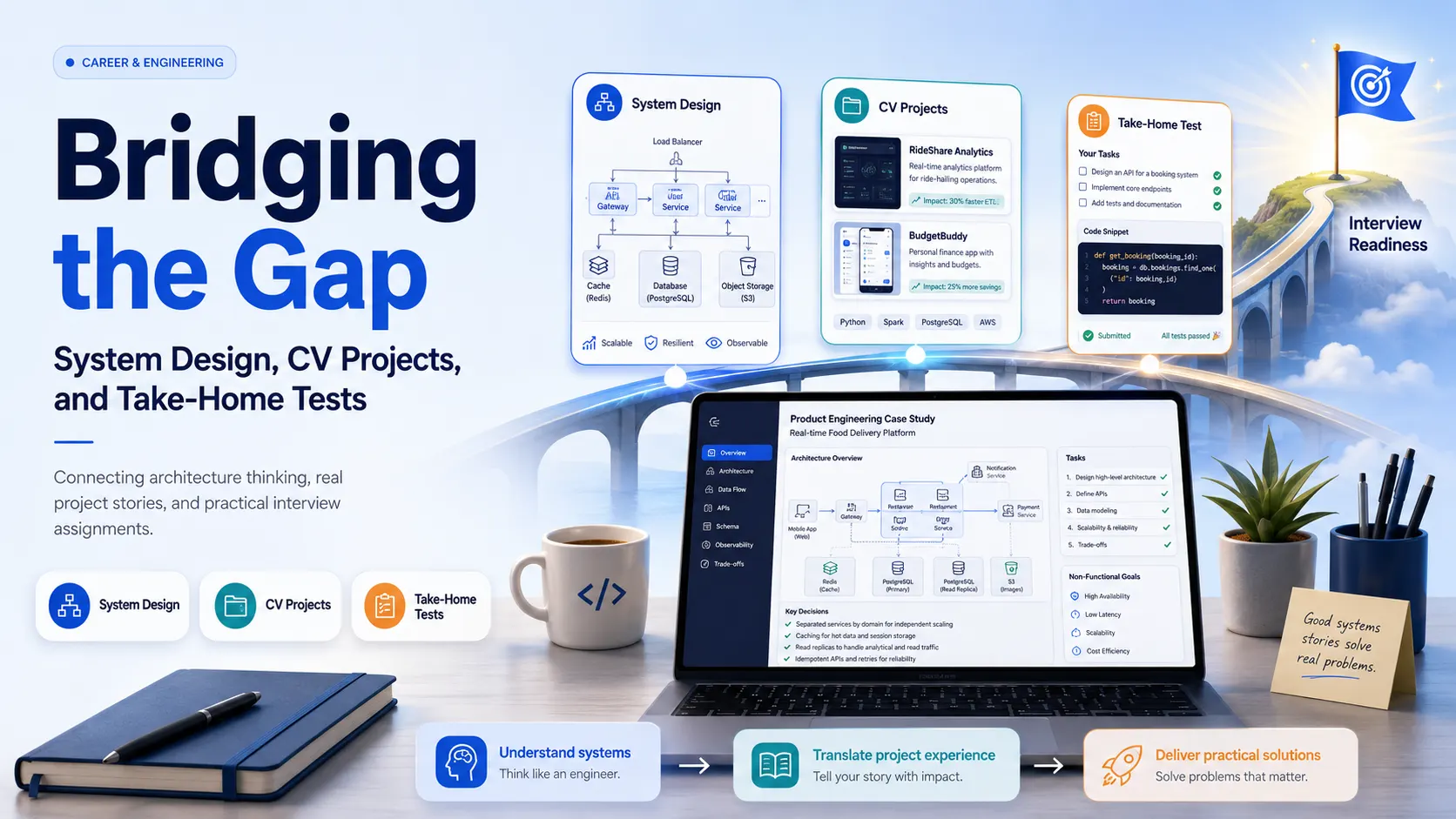
While algorithms often get the most attention (and induce the most anxiety) during interview preparation, they are only one part of the equation. As I progressed in my journey, I realized that companies also heavily index on your ability to design systems, discuss past projects intelligently, and build practical applications.
This post details my strategy for tackling these more holistic, less rigid parts of the interview process.
One of the biggest mistakes I initially made was treating "System Design" and "Past Projects" as two completely separate topics. Interviewers love it when you can apply abstract design principles to the concrete projects you have already built.
I started explicitly connecting the two:
This exercise made me sound significantly more experienced and grounded in reality, rather than just someone who memorized a textbook.
Unlike algorithmic coding which has clear right and wrong answers, system design is famously open-ended. To stop feeling lost, I adopted a framework.
Sometimes, instead of (or in addition to) live interviews, companies give take-home assignments. These test your practical software engineering skills.
The most important takeaway for me was realizing that these rounds are evaluating your maturity as an engineer. Can you communicate effectively? Can you justify your technical choices? Can you build something practical?
Balancing preparation between LeetCode, System Design, and polishing projects is tough, but treating them as interconnected skills rather than isolated chores made the entire process much more rewarding.
README.md explaining how to run the project and documenting my design decisions.